1. Why Mobile Lighting Is Shifting to Solar Power
In scenarios such as power emergency repair, municipal construction, firefighting operations, mining, and agricultural night production, lighting is often required in locations without grid power or where wiring is inconvenient. The traditional approach involves fuel generators to power lighting fixtures, at the cost of fuel transportation, noise disturbance, and exhaust emissions, with dedicated personnel needed for refueling during continuous night operations. Mobile solar light towers combine PV power generation, energy storage, and a movable support structure—charging during the day and supplying power at night—reducing dependence on external energy sources and lowering on-site O&M complexity.
For procurement and engineering personnel, determining whether a unit is suitable depends not on individual specifications but on whether PV power, energy storage capacity, luminaire efficiency, and lifting structure are properly matched. The following sections elaborate from structural and scenario perspectives.
2. Applicability Logic of the 4×200W PV Configuration
This product features four PV modules rated at 200W each, forming a 4×200W power generation unit. The advantage of distributing multiple modules lies in controllable individual panel area for easy folding, storage and transport, while stringing them together for combined output maximizes light-capturing area within limited vehicle-mounted or trailer space. For work schedules requiring daytime recharging and continuous nighttime lighting, this configuration suits medium-duration, medium-illuminance applications.
It should be noted that actual charging efficiency is affected by sunlight conditions, module orientation and tilt angle, ambient temperature and other factors, with significant variation across seasons and regions. Specific parameters such as energy storage capacity, luminaire power and runtime are not listed on this page. Please contact us for detailed specifications to enable matching calculations based on the solar resource and operating duration at your project site.
III. Structural Features and Deployment
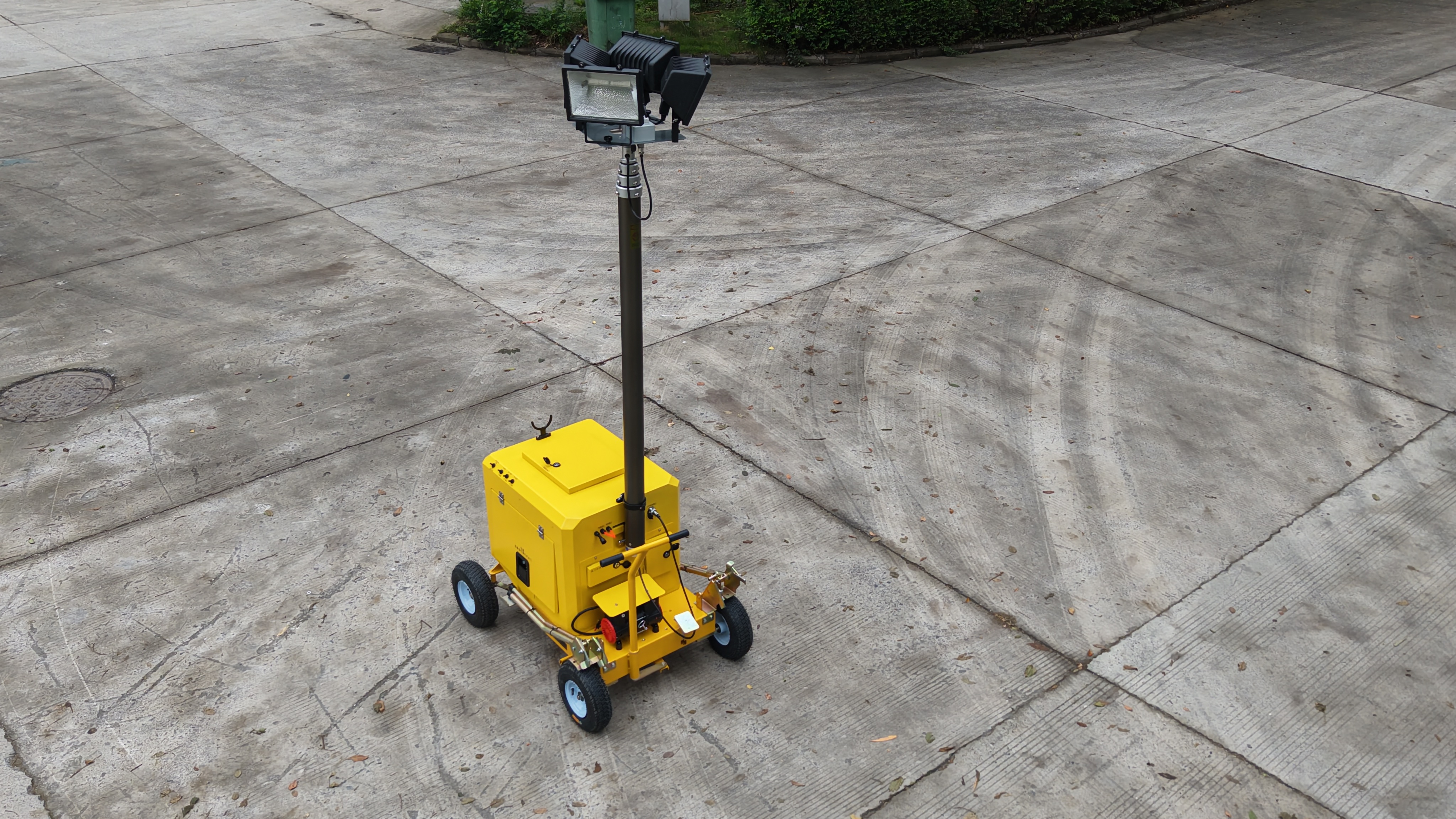
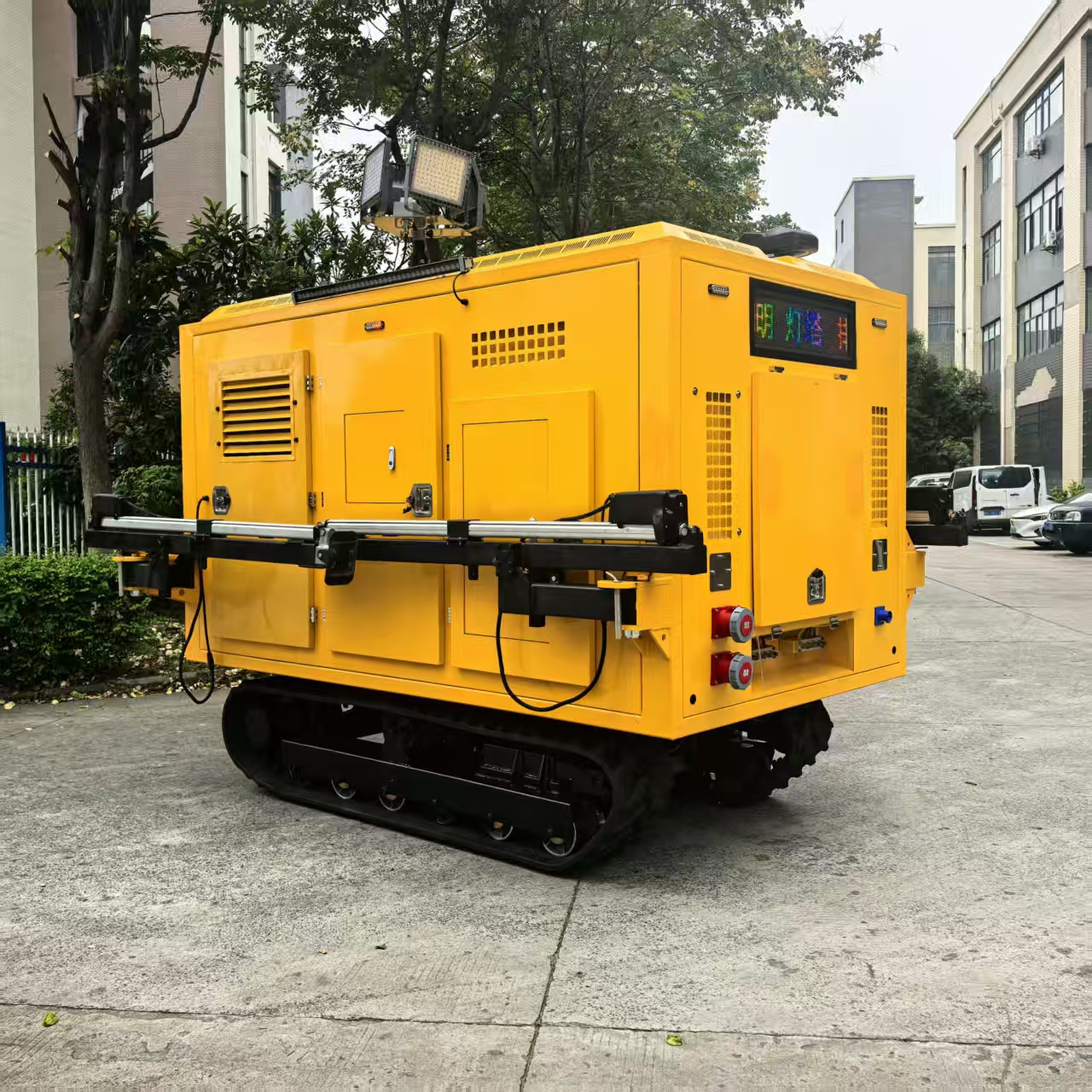
A mobile solar light tower typically comprises a chassis running gear, a lifting mast, luminaire assemblies, PV panel brackets and a control cabin. The design must address ease of operation across three phases: transport, deployment and retrieval.
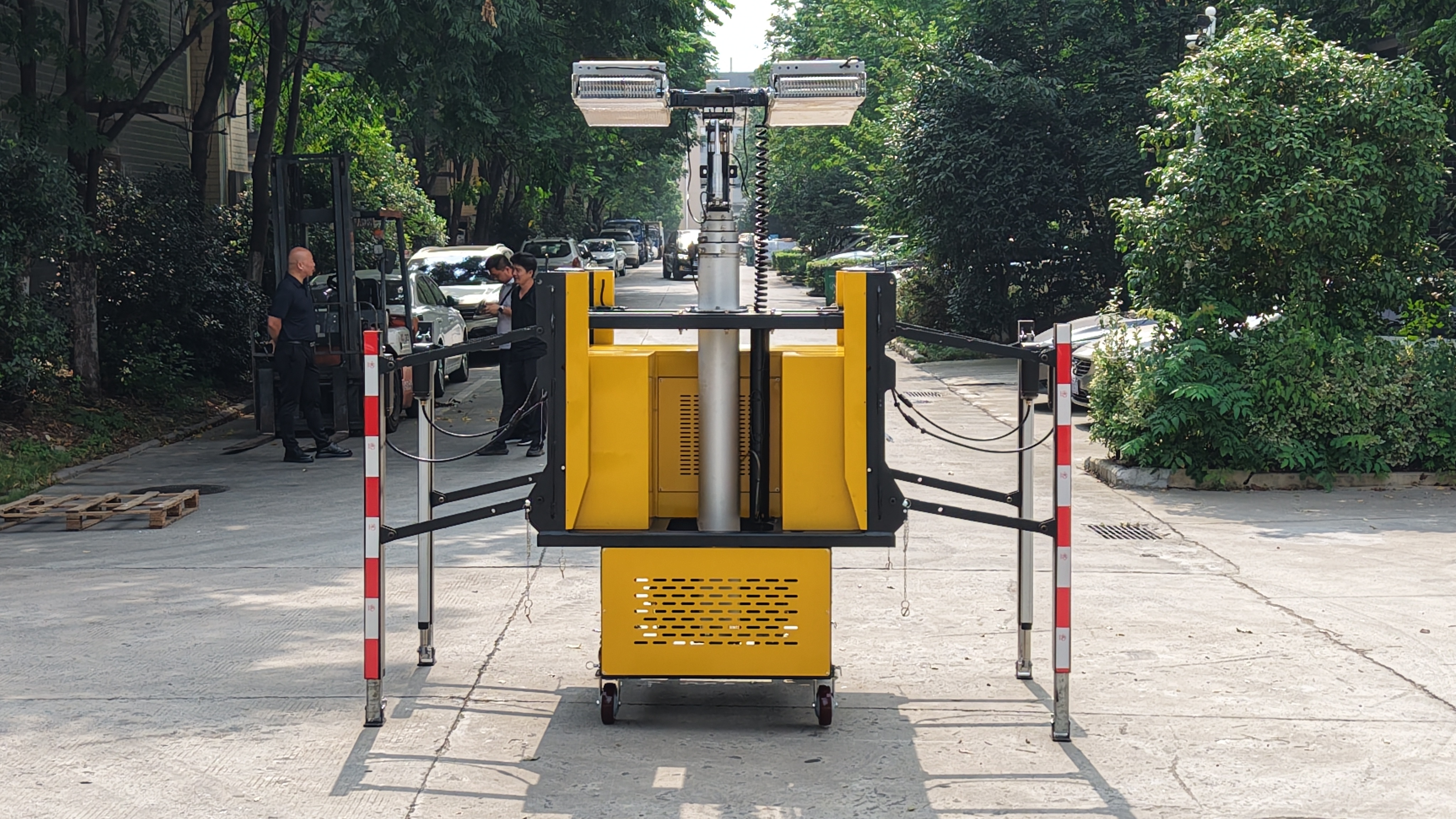
- Mobility and support: The chassis must balance transportability and stability. Once in position, outriggers or counterweights enhance wind resistance to prevent tipping on soft ground, slopes or construction sites.
- Lifting mast: A telescopic structure raises the luminaires to an appropriate height to expand the illuminated area. Raising and lowering should be simple to operate with reliable locking measures.
- PV brackets: Module brackets support angle adjustment for optimized light capture based on latitude and season. In the stowed position, wind-facing area should be minimized for convenient vehicle transport.
- Control and protection: The control cabin centrally manages charge/discharge and lighting switches. The enclosure should provide adequate dust and water resistance to withstand outdoor dust, rain, fog and temperature variations.
- Luminaire assemblies: Multiple lamp heads cover a larger area, with adjustable head angles for distributing illuminance according to on-site requirements.
For deployment, select an open, unobstructed and level site, avoiding shadows from tall structures and trees. In windy areas, lower the mast height or add additional securing measures. Before transporting the equipment, confirm that the PV panels are stowed and locked to prevent damage from vibration.
IV. Typical Applications and Selection Guidelines
In the power and municipal sectors, the equipment can be used for line repair, pipeline construction and temporary road lighting. In firefighting and emergency scenarios, it serves as an auxiliary light source for on-site operations. In mining and agricultural settings, it is primarily used for supplementary lighting of stockyards, yards and nighttime work areas. Requirements for runtime, illuminance and protection rating vary by application. When selecting a model, first define daily lighting duration, work area and power supply continuity requirements, then determine the PV-to-storage ratio accordingly.
Anhui Rongpan Technology Co., Ltd. specializes in the R&D and sales of emergency lighting and power generation equipment, and can provide configuration recommendations based on usage scenarios. For detailed specifications, optional configurations, and delivery methods of the 4×200W mobile solar light tower, please contact us for more information.