Why Emergency Sites Need Standalone Mobile Lighting
In scenarios such as power emergency repair, municipal road construction, firefighting response, mining operations and nighttime agricultural harvesting, lighting is often the first thing needed yet the hardest to deploy quickly. Fixed lighting relies on existing distribution lines; once the lines are damaged or the site itself has no power access point, even the best luminaires cannot be lit. Although diesel generator equipment can supply power, it involves fuel storage and transport, exhaust emissions and operating noise, which limits its use in enclosed or environmentally sensitive areas.
The concept of the mobile solar lighting tower is to integrate power generation, energy storage, lighting and control into a towable or transportable carrier, supplementing charge via photovoltaic modules during the day and providing illumination for the work area at night. It does not rely on the on-site power grid and requires no on-site fuel refilling, making it suitable as a supplementary means of emergency and temporary lighting. Anhui Rongpan Technology Co., Ltd. focuses on emergency lighting and power generation equipment, and the mobile solar lighting tower is one of the equipment forms under this product approach.
Typical Application Scenarios and Usage
Different industries have different requirements for mobile lighting. Before selecting a model, clarifying how the equipment will be used is more meaningful than simply comparing lamp brightness.
- Power and municipal emergency repair: Work sites are scattered and schedules are irregular. Equipment must be transportable with engineering vehicles and quickly deployed upon arrival. In such scenarios, deployment and retraction efficiency and wind resistance stability are more important.
- Firefighting and emergency rescue: Sites often have no pre-existing power supply and require fast response. A balance must be struck between lighting coverage and equipment transport convenience.
- Mining and field construction: Road conditions are poor, and dust and vibration are common. The durability and protection performance of structural components deserve greater attention.
- Agriculture and temporary operations: Use is seasonal, and equipment idle periods are long. The storage and maintenance convenience of the energy storage system affects the long-term user experience.
It should be noted that specific lighting coverage area, continuous operating time, and charging efficiency are affected by on-site lighting conditions, ambient temperature, and load settings, and actual performance may vary. Please contact us for detailed specifications.
Structural Features: Engineering Considerations from Transport to Deployment
The structure of a mobile solar lighting tower is typically designed around the process of "transport—deployment—lighting—retrieval." Several key components should be confirmed item by item during procurement.
Chassis and Mobility
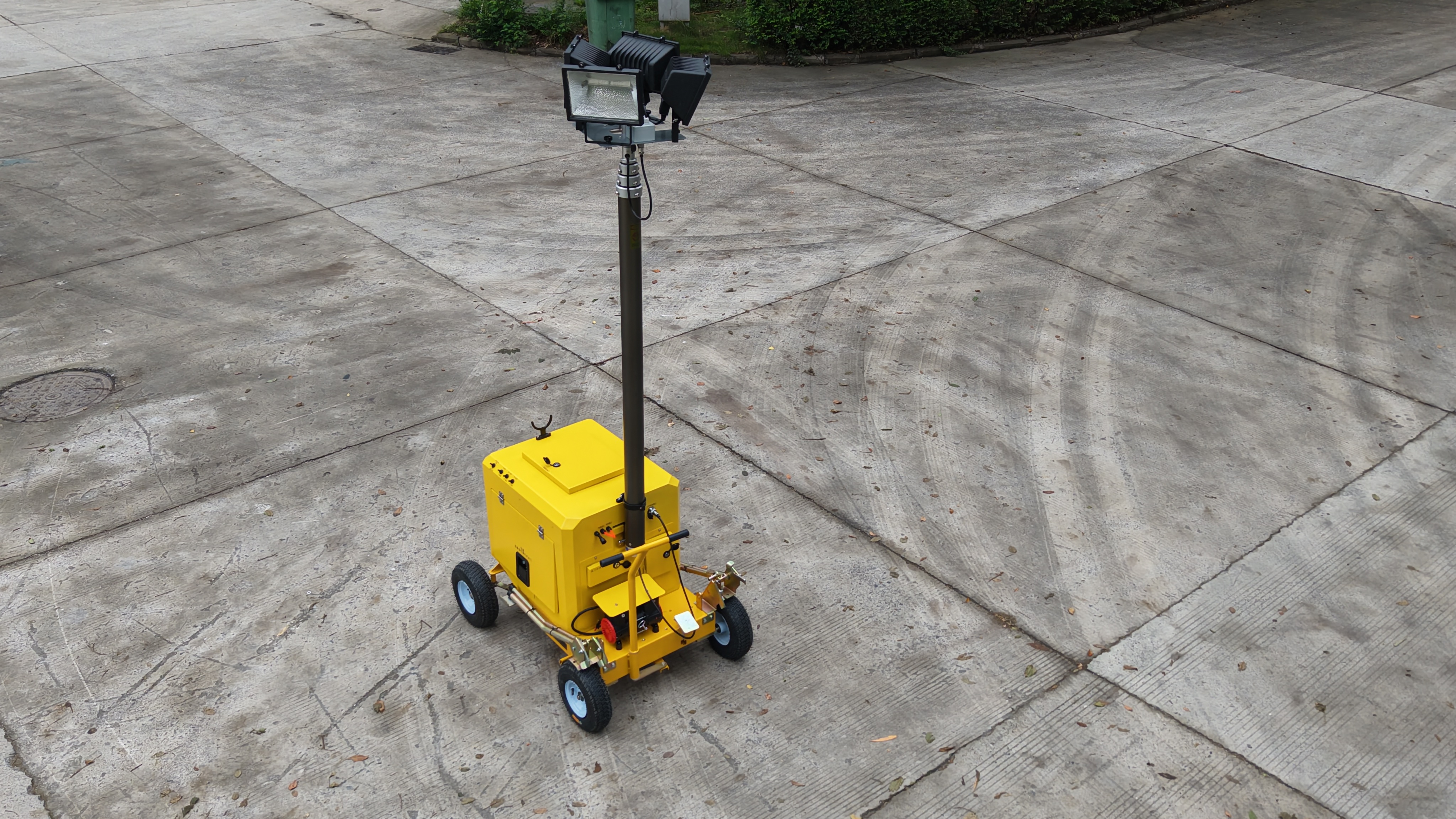
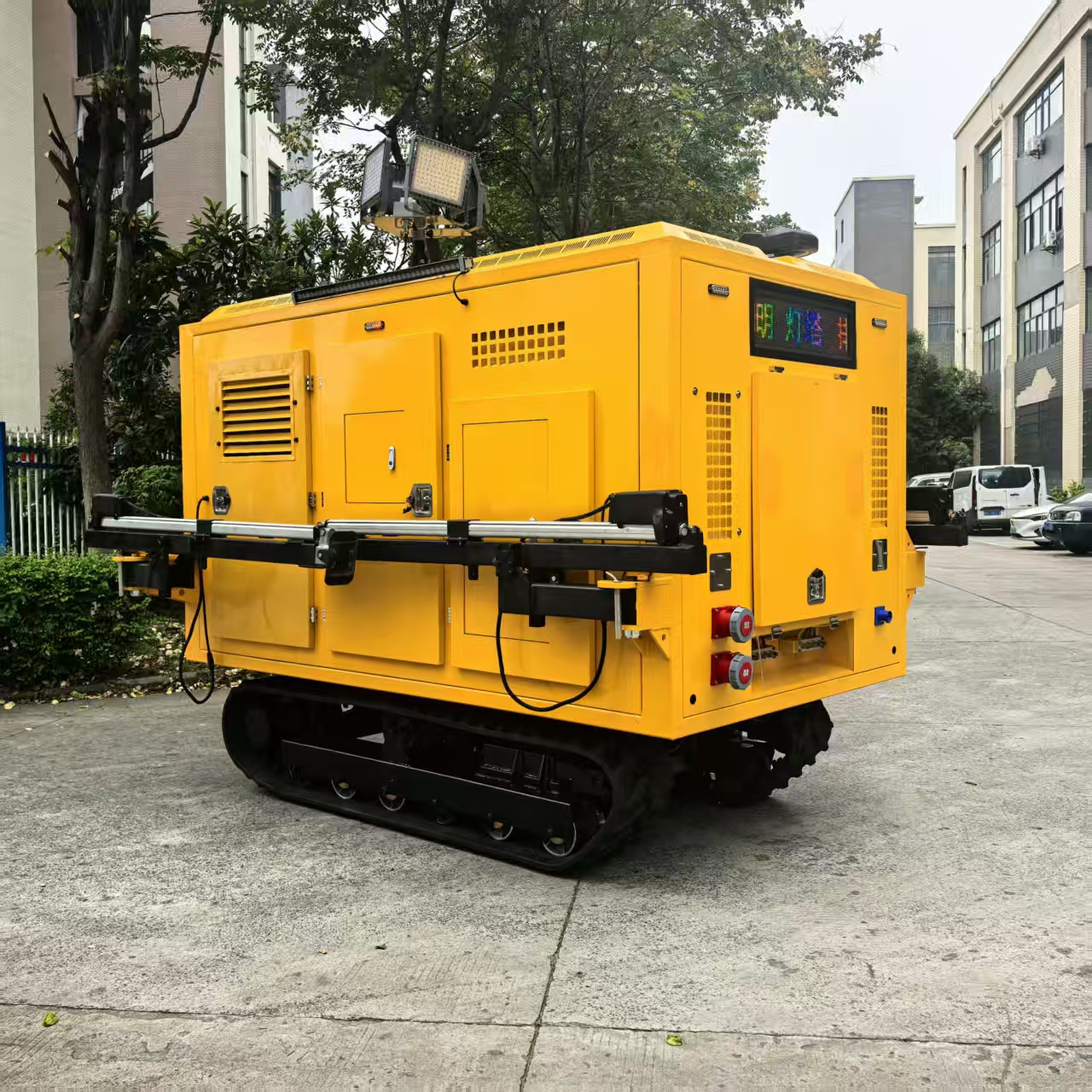
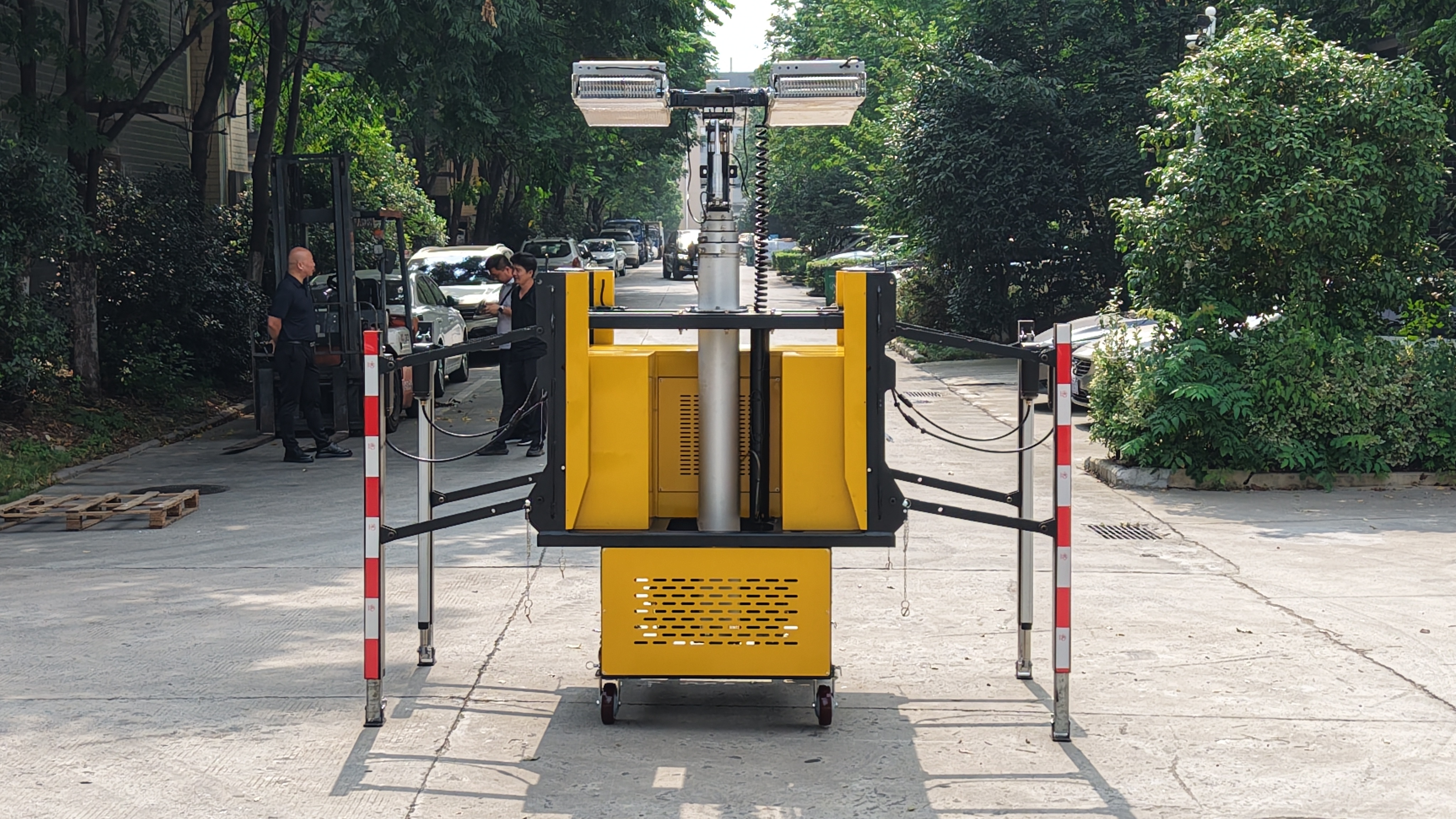
Common forms include trailer-mounted and hand-push types. Trailer-mounted types are suitable for long-distance transport with vehicles, and attention should be paid to the towing structure, parking supports, and securing method during travel; hand-push types are better suited for short-distance movement within factory areas and industrial parks. Chassis ground clearance and wheel assembly configuration affect passability on unpaved roads.
Photovoltaic Modules and Lifting Structure
The installation angle and orientation of photovoltaic modules directly affect charging efficiency. Adjustable-angle brackets enable the equipment to obtain more suitable light exposure conditions at different latitudes and seasons. The lamp pole lifting structure determines the lighting height and coverage area; attention should be paid to the ease of lifting operation, locking reliability, and wind resistance in the raised position.
Energy Storage and Control Section
The energy storage unit and controller are typically housed in a protective enclosure. Attention should be paid to the enclosure's protection rating, heat dissipation design, and maintenance accessibility. The control section generally provides functions such as lighting switches, brightness adjustment, and battery level display. Some configurations support timer or photocell control logic, facilitating unattended operation.
Luminaires and Light Distribution
The light distribution pattern of luminaires affects the light spot shape and illumination uniformity. Large work areas and pathway lighting have different light distribution requirements. During procurement, light distribution requirements can be specified based on the site layout and working height.
Procurement and O&M Recommendations
For procurement and engineering personnel, it is recommended to clarify three matters before requesting quotations: the road and transportation conditions at the usage site, the required lighting duration at night, and the personnel responsible for equipment storage and routine maintenance. On this basis, discuss structural and configuration options with the supplier to avoid comparing on a single metric alone.
Regarding operation and maintenance, dust accumulation and shading on the surface of photovoltaic modules can significantly affect charging performance; regular cleaning is a fundamental routine maintenance action. When the energy storage system is idle for extended periods, it should be kept at a reasonable state of charge per the instructions. Lifting and towing structures should be regularly checked for fastener tightness and lubrication. The above are general recommendations; for specific maintenance intervals and procedures, please refer to the accompanying technical documentation.
Anhui Rongpan Technology Co., Ltd. provides configuration consultation and selection support for mobile solar lighting towers based on usage scenarios. Please contact us for information related to the parameter table.